Could a Chiropractor be part of your migraine solution?
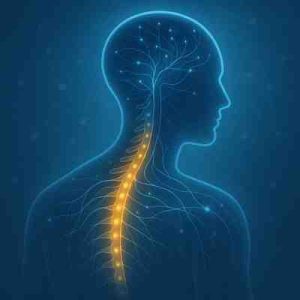 If your migraines are becoming more frequent and intense, it may be time to have your spine assessed. Research shows that when spinal joints don’t move properly, the brain can receive scrambled signals — affecting posture, balance, and coordination. Chiropractic care aims to restore healthy spinal motion and improve communication between the brain and body, which has shown to help reduce migraine frequency and intensity, and in some cases remove migraines or headaches altogether.
When migraine symptoms include loss of vision, dizziness, vertigo, weakness or reduced movement in certain body parts, it can suggest that the spin, neck and head mechanics may be involved. A chiropractor can assess whether tension or misalignment in your spine is contributing to your migraines and help restore proper movement and nervous system communication.
Common factors that can contribute to spinal joint dysfunction
- Poor posture – especially forward head posture from screen use or long hours at a desk.
- Repetitive movement or sustained positions – such as long drives, computer work, or manual labour.
- Previous injuries – even minor falls, whiplash, or sports impacts can alter joint motion.
- Stress and muscle tension – emotional or physical stress can tighten neck and shoulder muscles, restricting spinal movement.
- Sedentary lifestyle – lack of regular movement can lead to stiffness and joint restriction.
- Sleep position – awkward pillows or prolonged side/stomach sleeping can strain the neck and upper spine.
- Jaw tension (TMJ dysfunction) – can influence neck mechanics and upper cervical alignment.
Haavik et al. (2016, 2021) proposes that when a spinal joint isn’t moving properly (a so-called “vertebral subluxation”), the afferent (sensory) input from that spinal region to the central nervous system is altered.
In plain language this means that the signals coming from the spine and nearby joints/muscles to your brain can be scrambled, dampened or delayed. Because the brain uses those signals to monitor and coordinate muscle action, posture, balance and movement, this can lead to less precise muscle control, poorer body awareness, and altered coordination.
By restoring better spinal joint motion (via adjustment), Haavik’s work shows that the brain’s processing of that input can change — which then improves motor output (how the muscles respond) and the communication loop between brain ↔ spinal cord ↔ and body.
How this affects Migraines and Headaches
Spinal dysfunction can alter how the brain processes pain. When the spine isn’t moving as it should, poor sensory feedback can amplify or distort pain perception — a process known as central sensitization. This same heightened sensitivity is often seen in migraine and chronic tension-type headaches.
In Kick That Migraine, I explain how the upper cervical spine shares nerve pathways with the trigeminal system — the key network responsible for transmitting facial and head pain. When joint dysfunction in the neck disrupts normal sensory input, these shared pathways can become sensitised, lowering the threshold for migraine or tension-type headache activation.
By restoring healthy joint movement, chiropractic care may help reduce this abnormal input, allowing the brain to better regulate and quiet its pain signals.
References
Haavik H, Murphy B. The role of spinal manipulation in addressing altered sensorimotor integration and motor control: A review of the neurophysiological evidence. Journal of Manipulative and Physiological Therapeutics. 2011;34(5):282–293.
Haavik H, Murphy B. The impact of spinal manipulation on the brain and nervous system. Brain Sciences. 2021;11(6):771.
Haavik H, Niazi IK, Jochumsen M, Sherwin D, Flavel SC, Türker KS. Changes in motor control following spinal manipulation: A systematic review. Frontiers in Neuroscience. 2016;10:596.
Haavik H, Murphy B, et al. Neuroplasticity and spinal function: A review. Neuroplasticity. 2017;2017:7084353.
Haavik H, Murphy B. Subclinical neck pain and sensorimotor function: Evidence for altered motor control. Manual Therapy. 2012;17(6):512–517.
Bogduk N. Cervicogenic headache: Anatomic basis and pathophysiologic mechanisms. Cephalalgia. 2001;21(9):921–927.
Haavik H. The Reality Check: A Quest to Understand Chiropractic from the Inside Out. Auckland: Heidi Haavik Research; 2014.